The Babbage Engine Detailed
| Parameter | Difference Engine No. 2 | Analytical Engine |
|---|---|---|
| Primary Function | Polynomial tabulation | General-purpose computation |
| Input Method | Gear setting | Punched cards |
| Memory | None (transient output) | 1,000 numbers (50 decimal digits) |
| Status | Built in 1991 (Science Museum) | Partial prototype only |
The mechanical computing era represents one of the most significant temporal gaps in technological history. The designs formulated between 1822 and 1837 contained all the logical components of modern computer architecture: an arithmetic logic unit (the "mill"), control flow via conditional branching, and memory (the "store").
However, the execution relied on thousands of precisely machined brass gears. The metallurgical consistency and tooling precision required to manufacture these parts at scale simply did not exist during the Victorian era. The British government ultimately withdrew funding after investing £17,000—a substantial fortune at the time—with no working machine to show for it.
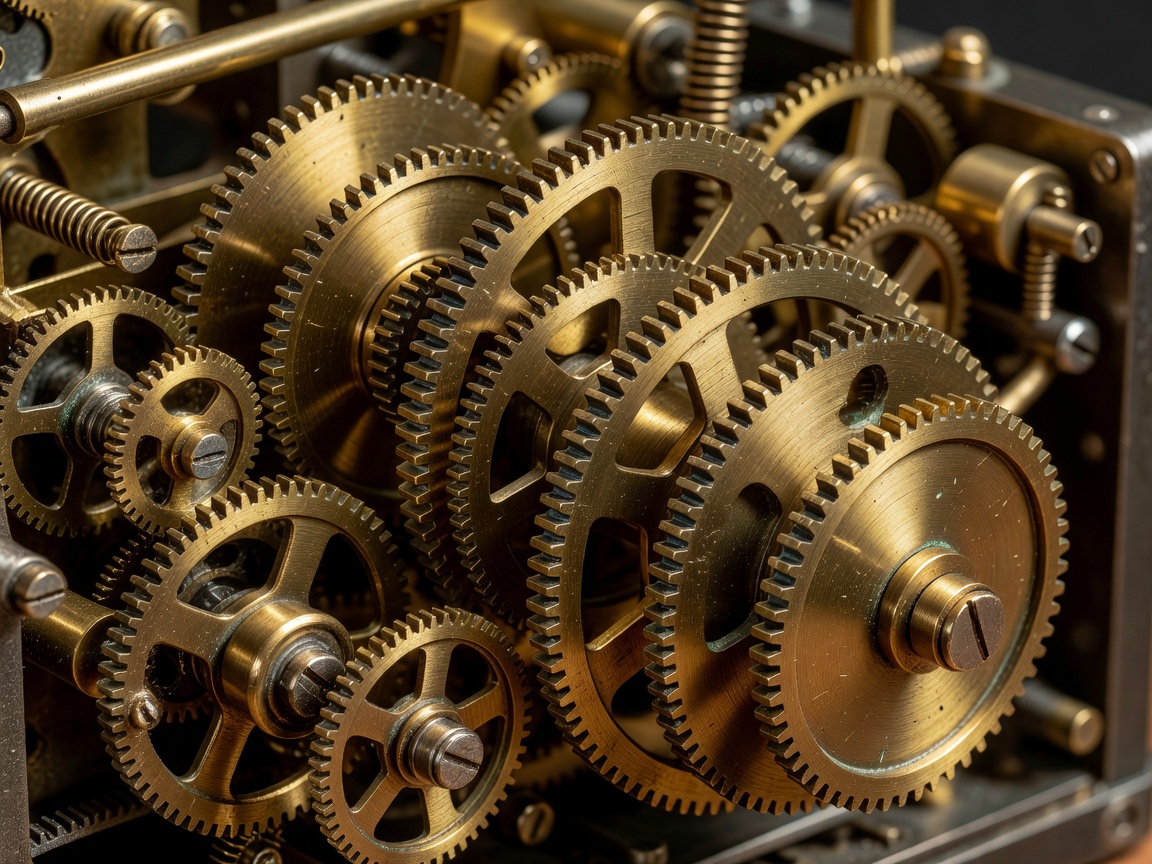
The Antikythera Mechanism
Predating Babbage by nearly two millennia, the Antikythera mechanism (circa 100 BCE) serves as another stark reminder of lost technology. Recovered from a shipwreck in 1901, x-ray tomography revealed an intricate bronze gear system used to predict astronomical positions and eclipses. Knowledge of this level of mechanical engineering was lost to Western civilization until the development of astronomical clocks in the 14th century.